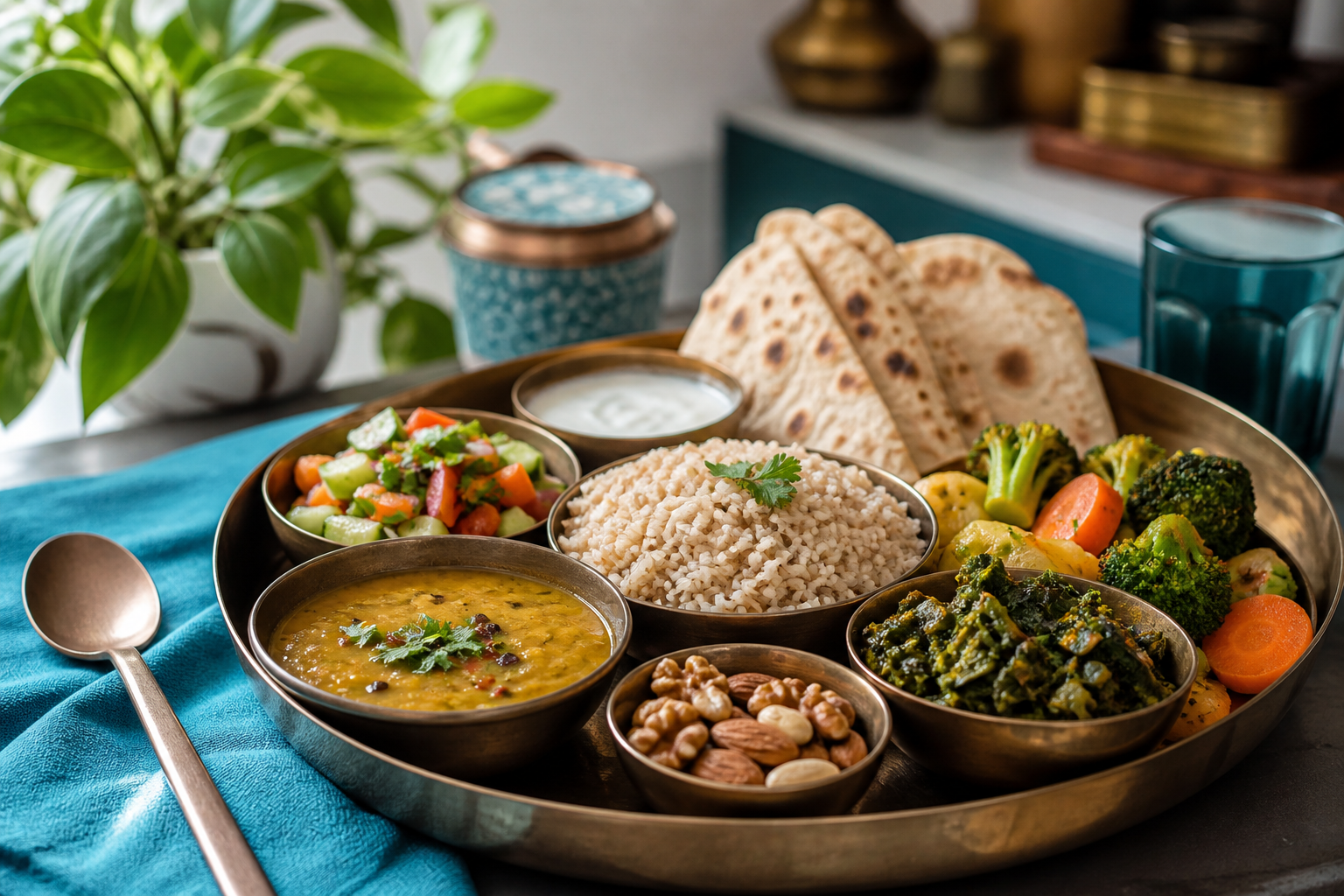
Heart-Healthy Eating for Indian Households: Practical Swaps That Stick
Reduce salt and saturated fat without losing flavour — dal, roti, snacks, and dining-out strategies.
Heart disease has become one of India's biggest health challenges, and diet sits right at the centre of both the problem and the solution. Traditional Indian cooking, for all its flavour and variety, often leans heavily on salt, deep-frying, and generous use of ghee or refined oils — habits built up over generations and tied closely to comfort, celebration, and taste. The good news is that protecting your heart does not require abandoning Indian food altogether. It requires a set of practical, sustainable swaps that keep the flavours you love while quietly reducing the load on your blood vessels.
This guide focuses on realistic changes for Indian households — the kind you can actually maintain at a family dinner table, not restrictive diet-plan advice that gets abandoned within a fortnight.
The Salt Problem in Indian Cooking
Excess sodium is one of the most significant, and most fixable, contributors to high blood pressure, which in turn is a leading driver of heart attacks and strokes. Indian diets tend to be high in sodium not just from table salt, but from pickles, papad, ready-made masalas, packaged snacks, and salted chutneys eaten alongside meals.
- Cut back gradually, not suddenly: Taste buds adjust to lower salt over two to three weeks; a sudden drastic cut often feels bland and gets abandoned. Reduce salt by roughly a quarter each week until you reach a lower, sustainable level.
- Use lemon, tamarind, and spices for flavour: Sourness and robust spicing (jeera, dhania, ajwain, black pepper, ginger-garlic) can carry a lot of flavour without relying on extra salt.
- Limit pickles and papad to occasional treats: These are often disproportionately high in sodium relative to the small quantity eaten.
- Watch packaged snack sodium content: Namkeen, instant noodles, and packaged sauces frequently contain far more sodium per serving than expected — checking the label is genuinely worthwhile.
- Keep the salt shaker off the dining table: Adding salt at the table, on top of what is already cooked in, is a habit worth breaking deliberately.
Fats and Oils — What to Change, Not Eliminate
Fat itself is not the enemy; the type and quantity matter far more than eliminating it entirely.
- Reduce, rather than eliminate, ghee and butter: A small amount used for flavour (such as a teaspoon over dal or roti) is different from generous daily use across every dish.
- Rotate cooking oils: Using a mix of oils such as mustard, groundnut, rice bran, or olive oil over time, rather than one single oil exclusively, spreads out the fat profile rather than concentrating one type.
- Cut down on repeated deep-frying and reused oil: Oil that has been heated and reused multiple times (common with frying snacks) develops harmful compounds; discard oil after one or two uses at most, and avoid over-heating oil until it smokes.
- Choose grilling, roasting, steaming, or pressure-cooking over deep-frying: Tandoori-style grilling, steaming idlis and dhoklas, and simple roasting deliver flavour with far less added fat.
- Watch hidden trans fats: Vanaspati, some bakery items, and certain packaged biscuits and namkeens can contain partially hydrogenated fats, which are more harmful to heart health than most natural fats — check ingredient lists for "partially hydrogenated" or "vanaspati."
Dal, Roti, and Rice — Small Swaps That Add Up
The staples of an Indian plate offer some of the easiest, most sustainable improvements.
- Add more whole grains to roti flour: Mixing in bajra, jowar, or ragi flour with wheat atta increases fibre content, which supports healthy cholesterol levels.
- Choose brown or hand-pounded rice occasionally instead of only polished white rice: This adds fibre without requiring a complete switch away from familiar staples.
- Make dal a daily habit, not an occasional one: Lentils and pulses are rich in protein and fibre and support heart health when eaten regularly, particularly in place of heavier meat-based curries.
- Increase vegetable proportion on the plate: A simple mental model — half the plate as vegetables and salad, a quarter as whole grains, a quarter as dal or lean protein — naturally reduces the share of refined carbohydrates and fried items.
- Be mindful of ghee-laden tadka: A light tempering with minimal oil delivers most of the flavour of a heavy tadka.
Snacks: Fried Namkeen Alternatives
Evening snacking is deeply embedded in Indian food culture, and it does not need to disappear — it needs better options in easy reach.
- Roasted chana, murmura (puffed rice) bhel with minimal oil, or roasted makhana (fox nuts) with light spices instead of deep-fried mixtures.
- Homemade sprouts salad with lemon, onion, and chaat masala instead of packaged fried snacks.
- Fresh fruit or a small bowl of nuts (unsalted almonds, walnuts) in moderate portions as a mid-evening option.
- Baked or air-fried versions of familiar snacks like samosas or cutlets on occasions when the craving is strong, rather than deep-fried versions every time.
- Buttermilk (chaas) with roasted jeera instead of sugary or creamy beverages.
Eating Out and Festivals Without Losing Control
Restrictive thinking rarely survives a wedding season or a festival table, so the goal is smarter navigation rather than total avoidance.
- Portion awareness over elimination: Enjoy a small portion of a rich festival sweet or fried item rather than either avoiding it completely or eating without limit.
- Fill up on vegetables and dal first at a buffet: This naturally reduces how much room is left for the richest, most calorie-dense dishes.
- Ask for less oil or ghee when ordering at restaurants: Many Indian restaurants can accommodate this request, especially for curries and dal preparations.
- Balance a heavy meal with lighter meals before and after: If lunch at a wedding is rich, keep breakfast and dinner that day simple and vegetable-forward.
- Stay active around festival periods: A short walk after a heavy meal supports digestion and modestly helps manage the extra calorie load.
Reading Labels for Sodium and Trans Fat
Packaged foods are an increasingly large part of the Indian diet, and label-reading is a genuinely useful heart-health skill.
- Check sodium content per serving, not just per 100g, since serving sizes are often smaller than what people actually eat in one sitting.
- Look out for "partially hydrogenated vegetable oil" or "vanaspati" in ingredient lists, which signal trans fat content.
- Compare similar products side by side — sodium and saturated fat levels can vary significantly between brands of the same snack category.
- Be cautious of "low fat" labels, since some low-fat products compensate with extra sugar or salt to maintain taste.
A Sample Day of Heart-Healthy Indian Eating
- Morning: Warm water with lemon, followed by a moderate breakfast of vegetable-stuffed multigrain paratha (light oil) or poha with peanuts, and a small bowl of curd.
- Mid-morning: A handful of unsalted nuts or a piece of fruit.
- Lunch: Roti (mixed-grain atta), a generous vegetable sabzi, dal, a small portion of rice, and salad, with minimal added ghee.
- Evening: Roasted chana or murmura bhel with buttermilk.
- Dinner: A lighter meal such as vegetable soup with grilled paneer or fish (where eaten), and a small portion of roti or rice — keeping dinner lighter than lunch generally supports better digestion and sleep.
How Your Pharmacist Can Help
At MedsNMore, our pharmacists can help you understand how diet interacts with prescribed heart medicines, such as blood thinners that require consistent vitamin K intake from green leafy vegetables, or statins where grapefruit interactions are sometimes a concern. They can also guide you on home blood pressure monitors, cholesterol check-up reminders, and general nutrition questions that come up as you make dietary changes alongside your treatment plan.
Frequently Asked Questions
Is ghee completely bad for the heart?
No. Ghee in small, controlled amounts is not inherently dangerous for most people, and it carries cultural and culinary value. The concern is typically about the total quantity used across all meals in a day, not its occasional use in moderation.
How much salt is actually recommended per day?
Health guidelines generally recommend keeping sodium intake under roughly 2,000mg per day for most adults, equivalent to about one teaspoon of salt total, including salt already present in cooked food, pickles, and packaged snacks — not just what is added at the table.
Are all packaged "healthy" snacks actually heart-friendly?
Not always. Marketing terms like "baked" or "low fat" do not guarantee low sodium or low sugar. Always check the nutrition label rather than relying on front-of-pack claims.
Can I still eat non-vegetarian food on a heart-healthy diet?
Yes, lean proteins such as fish, skinless chicken, and egg whites can fit well into a heart-healthy Indian diet. The main considerations are cooking method (grilled or curried rather than deep-fried) and portion size, along with limiting red meat and processed meat.
Do I need to completely avoid rice to protect my heart?
No. Rice itself is not the primary concern; portion size and what accompanies it (fried items, excess ghee) matter more. Choosing brown or less-polished rice occasionally, and balancing the plate with vegetables and dal, is a more sustainable approach than complete avoidance.
How quickly can dietary changes improve heart health markers?
Some markers, such as blood pressure, can respond within weeks of consistent salt reduction and increased activity. Cholesterol improvements typically take longer, often several weeks to a few months, and are best tracked with periodic check-ups alongside dietary change.
Disclaimer
This article is for general educational purposes only and does not replace professional medical advice, diagnosis, or treatment. Individual dietary needs vary based on existing heart conditions, diabetes, kidney function, and prescribed medicines. Always consult your doctor or a registered dietitian before making significant changes to your diet, particularly if you have an existing cardiac condition or are on medication that interacts with specific foods.
Comments
Start the conversation
No comments yet. If you have a practical note for other readers, add it below.