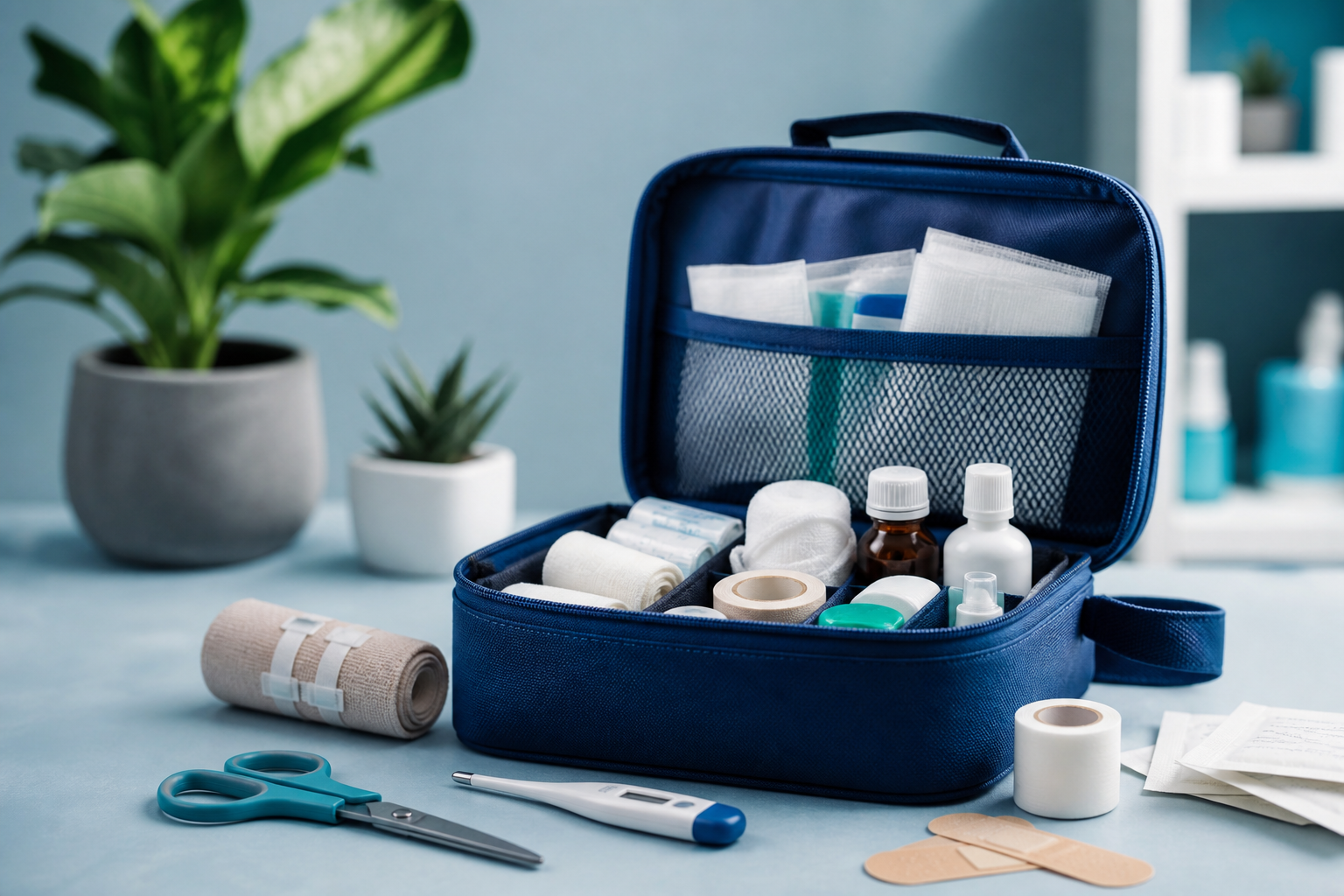
First Aid Kit Essentials for Indian Homes and Travel
Bandages, antiseptics, ORS, fever care, and season-specific additions for monsoon and summer.
A cut from a kitchen knife, a child's scraped knee, a sudden fever at midnight, or a bout of traveller's diarrhoea on a family trip — most minor health emergencies do not need a hospital visit, but they do need the right supplies at hand, quickly. Yet many Indian homes either have no organised first aid kit at all, or one so outdated that the antiseptic has evaporated and the bandages have lost their stick. This guide covers what belongs in a genuinely useful first aid kit for Indian homes, plus season-specific additions for monsoon and summer, and a simple travel version you can carry anywhere.
Why Every Home Needs a Proper First Aid Kit
India's climate, road conditions, and household routines create a fairly predictable set of minor injuries and illnesses: cuts and burns in the kitchen, insect bites and monsoon infections, heat-related dehydration in summer, and the occasional stomach upset from food or water. A well-stocked kit means you are not scrambling to find an open pharmacy at 11 pm for a bandage or an antiseptic, and it also means less risk of using an expired or contaminated product in a hurry.
Building a Basic First Aid Kit
Wound Care Essentials
- Adhesive bandages (multiple sizes) for small cuts and blisters
- Sterile gauze pads and a roll of gauze bandage for larger wounds
- Adhesive tape to secure dressings
- Antiseptic solution such as povidone-iodine or chlorhexidine for cleaning wounds
- Antiseptic cream or ointment for minor cuts and scrapes
- A clean pair of tweezers for splinters or thorns
- Small, blunt-tipped scissors
- Disposable gloves to protect both the caregiver and the wound from contamination
- A digital thermometer
- A cotton roll and cotton swabs
Fever and Pain Relief
- Paracetamol tablets and paediatric paracetamol syrup for fever and mild pain (check adult and child dosing separately)
- A basic anti-allergic tablet for mild allergic reactions or insect bites, as advised by your pharmacist
- A cooling gel or calamine lotion for insect bites, rashes, and minor burns
Digestive Care
- Oral Rehydration Solution (ORS) sachets — one of the most important and most underused items in Indian first aid kits
- A basic antacid for occasional acidity
- An anti-diarrhoeal or probiotic sachet, to be used only as directed and not as a substitute for medical care in severe cases
Beyond supplies, keep a small printed card with emergency numbers — your family doctor, the nearest hospital, an ambulance service, and a poison control contact if available in your city — tucked inside the kit itself, not just saved on a phone that might not be nearby in an emergency.
Monsoon-Specific Additions
The monsoon season brings its own set of predictable health issues across most of India: waterlogging-related skin infections, increased mosquito-borne illness risk, fungal infections from prolonged dampness, and higher rates of stomach infections from contaminated water. Consider adding:
- Mosquito repellent cream or spray, and a mosquito net if you live in a dengue or malaria-prone area
- An antifungal cream for damp-related skin infections, especially between toes and skin folds
- Extra ORS sachets, since waterborne stomach infections spike during this season
- A basic antiseptic foot soak or spray if family members frequently wade through flooded streets
- Waterproof adhesive bandages that stay on despite dampness
Summer-Specific Additions
Heat waves across much of India bring dehydration, heat exhaustion, and sunburn as common concerns. Add:
- Extra ORS sachets specifically for heat-related dehydration, not just stomach upsets
- A good broad-spectrum sunscreen for anyone stepping out during peak sun hours
- Aloe vera gel or a soothing after-sun lotion for mild sunburn
- Electrolyte sachets or drinks for outdoor workers, children, and elderly family members
- A cooling spray or damp cloth kept ready for early signs of heat exhaustion — dizziness, excessive sweating, or nausea
A Compact Travel First Aid Kit
Whether it is a family road trip, a train journey, or a trek, a smaller travel-ready version of your home kit should include:
- A handful of adhesive bandages and a small antiseptic sachet or wipes
- Paracetamol strip and any regular prescription medicines for family members, clearly labelled
- A few ORS sachets — essential for any trip, especially with children or in hot weather
- Motion sickness tablets if anyone in the family is prone to travel sickness
- A basic anti-allergic tablet and an antacid strip
- A copy of any critical prescriptions or a medical ID card for family members with chronic conditions, allergies, or regular medicines
- Hand sanitiser and a few disposable masks
Keep the travel kit in a clearly labelled, waterproof pouch that is easy to access without digging through the entire suitcase.
Kitchen and Household Burn Care
Minor burns and scalds are among the most common household injuries in India, whether from cooking oil splashes, a hot pressure cooker, or a stove flame. A few dedicated items make a real difference in the first minutes after a burn:
- Clean, cool (not iced) running water is the first response for any minor burn — hold the area under water for several minutes before applying anything
- A burn gel or burn-specific ointment, kept separately from regular antiseptic creams, since ordinary antiseptic creams are not ideal for fresh burns
- Non-stick sterile dressings that will not pull at healing burn tissue when changed
- A clean, soft cloth to loosely cover a burn while heading to a clinic, if the burn is larger than a coin or involves blistering
For any burn that is large, deep, on the face or hands, or shows white or charred skin, do not rely on home treatment — seek medical care immediately.
First Aid Considerations for Elderly Family Members
If your household includes elderly parents or grandparents, a few additions to the standard kit are worth considering. Keep a spare blood pressure monitor cuff or a small manual sphygmomanometer if anyone in the house manages hypertension, along with a simple log book to note readings during a minor health scare before reaching a doctor. Include any regularly prescribed emergency medicines the senior has been specifically advised to keep on hand, such as a sublingual tablet for known heart conditions, clearly labelled and checked for expiry more frequently than other items. A card with the senior's known allergies, chronic conditions, and current medicines should be kept inside the kit so that any family member or even a neighbour can hand it to paramedics in an emergency.
Storage and Expiry Checks
A first aid kit is only useful if its contents are actually usable when needed. Follow these habits:
- Store the kit in a cool, dry place away from direct sunlight — not in a car glovebox that heats up, and not in a humid bathroom cabinet
- Check expiry dates on all medicines and antiseptics at least twice a year; a simple reminder on your phone calendar works well
- Replace anything that looks discoloured, has an unusual smell, or has a broken seal, even if the printed expiry date has not passed
- Keep the kit in a container that seals well against monsoon humidity, which can degrade tablets and dressings faster than expected
- Restock immediately after using an item, rather than waiting until the next emergency to notice it is missing
What to Avoid Keeping in a Home First Aid Kit
- Prescription-only antibiotics kept "just in case" — self-medicating with leftover antibiotics can be harmful and contributes to antibiotic resistance
- Strong painkillers or sedatives without a doctor's specific recommendation for the person using them
- Old, unlabelled medicine strips where you are no longer sure of the contents or expiry
- Sharp instruments accessible to young children — store the kit on a shelf out of children's reach, while still being easy for adults to access quickly
Frequently Asked Questions
How often should I check and restock my first aid kit?
A good rule of thumb is every six months, or immediately after any illness or travel that used up supplies. Mark a recurring reminder so it does not get forgotten.
Is ORS really necessary if I don't have frequent stomach issues at home?
Yes. ORS is useful not just for diarrhoea but for heat exhaustion, mild dehydration during fevers, and travel-related stomach upsets. It has a reasonably long shelf life and is inexpensive, making it one of the most valuable items to always have on hand.
Can I keep antibiotics in my first aid kit for emergencies?
It is not advisable to keep antibiotics for self-prescribed use. Antibiotics should be taken only when prescribed by a doctor for a specific infection, at the correct dose and full course, to avoid resistance and other complications.
What is the single most important item people forget to include?
A written list of emergency contacts and any family member's critical medical information (allergies, chronic conditions, regular medicines) is frequently overlooked but can be lifesaving when someone else needs to help in an emergency.
Do I need a different kit for children versus adults?
Not necessarily a separate kit, but make sure you have paediatric formulations and dosing information for fever and pain medicines clearly marked, since adult and child doses differ significantly.
What is the right first response for a kitchen burn?
Cool the burn under clean running water for several minutes, avoid ice, and do not apply toothpaste, butter, or other home remedies. Use a burn-specific gel or dressing, and seek medical care for burns larger than a coin, blistered, or involving the face or hands.
Should elderly family members have any special items in the shared home kit?
Yes — consider a blood pressure monitor, any doctor-approved emergency medicines specific to their condition, and a written card listing their allergies, chronic conditions, and current medicines for use in an emergency.
Disclaimer: This article provides general guidance for building a home or travel first aid kit and does not replace professional medical advice. First aid supplies are meant for minor injuries and temporary relief only. For serious injuries, persistent symptoms, or medical emergencies, seek immediate medical attention from a qualified doctor or hospital.
Comments
Start the conversation
No comments yet. If you have a practical note for other readers, add it below.